Can You Plug a Space Heater Into an Extension Cord?
No, don't plug a space heater into an extension cord. Use a suitable wall outlet directly, because extension cords and power strips can overheat under a heater's load.
On this page (8 sections)
- Can you plug a space heater into an extension cord?
- Why are power strips and surge protectors risky?
- What if the wall outlet is too far away?
- How can you check an outlet before using a heater?
- Does a 1,500-watt heater need its own outlet?
- What should you do if a heater cord gets hot?
- Which heater fits a dry home office?
- What should you choose instead of a space heater extension cord?
No, you should not plug a space heater into an extension cord. Connect it directly to a suitable wall outlet, because an extension cord or power strip can overheat under the heater's sustained electrical load.
If the heater's own cord won't reach, change its position or your heating plan. Buying a thicker extension cord doesn't solve poor outlet placement.
Before choosing a heater, check where it can stand with enough clearance and a direct wall connection. Cord reach, room layout, and outlet condition matter as much as the heater's controls.
Can you plug a space heater into an extension cord?
Use a wall outlet directly, without an extension cord. The [U.S.
Consumer Product Safety Commission](https://www.cpsc.gov/) advises against using extension cords with space heaters because they can overheat and cause a fire.
A heater draws substantial current for long stretches. Undersized wire, damaged insulation, and loose connections can create heat along the electrical path.
A heavy-duty label doesn't make every connection secure or prevent damage from furniture, doors, or foot traffic. Don't use a lower heat setting as permission to ignore the heater's connection instructions.
Our guide to space heater safety covers placement and other precautions. For matching the heater to your room, see how to choose a space heater.
Why are power strips and surge protectors risky?
They add connections that can overheat, even when the heater is the only appliance plugged into them. Surge protection addresses voltage spikes, not every cause of heat buildup.
Don't use a multi-outlet adapter, smart plug, timer plug, or similar accessory to get around a direct-wall instruction. Built-in heater timers provide control without adding a separate plug-in device.
A heater's tip-over switch and overheat protection also serve different jobs. They don't establish that a worn wall receptacle, extension cord, or power strip can carry the load safely.
What if the wall outlet is too far away?
Move the heater to a suitable outlet or choose another heating method. If no position provides both cord reach and the required clearance, that location isn't suitable for the heater.
Measure the route the cord will actually follow before buying. Leave enough slack for a relaxed connection, and allow room around the heater's air intake and warm-air outlet.
Don't stretch the cord diagonally across a room, pinch it behind furniture, or route it through a doorway. Keep it visible so you can spot damage instead of hiding it beneath a rug.
For a room with no workable outlet position, ask an electrician about a suitable outlet and circuit arrangement. Another heater style won't fix an unsafe electrical connection.
How can you check an outlet before using a heater?
Start with visible condition and plug fit. Don't use an outlet with cracks, scorch marks, a loose faceplate, buzzing, or a plug that won't stay firmly seated.
Look over the heater's unplugged cord for cuts, crushed sections, or damaged plug blades. Don't patch a damaged heater cord with tape and put it back into service.
Why an outlet check doesn't approve a space heater extension cord
An outlet checker can identify certain wiring faults, but it can't approve an extension cord or prove the circuit has spare capacity. A normal result also doesn't rule out a worn connection that heats up under load.
The KAIWEETS GFCI Outlet Tester suits someone who wants a basic wiring and voltage check at North American 3-wire 120V outlets. Its LCD and auto hold function help when an outlet is awkward to read.
Skip this tool if your goal is to certify an outlet for heater use or diagnose visible damage. Those problems need an electrician, regardless of the screen result.
Read its instructions before using the GFCI button, since it can interrupt power. Don't press it casually where an interruption could affect other equipment.
Does a 1,500-watt heater need its own outlet?
Give the heater a direct wall connection and account for everything sharing its circuit. A 1,500W heater draws about 12.5 amps at 120V, and separate wall outlets can still share one breaker.
Don't assume moving a kettle, vacuum, or second heater to the next receptacle removes the combined load. If you don't know which outlets share a circuit, get help identifying them.
A breaker that trips repeatedly needs attention. Don't keep resetting it, replace it with a larger breaker, or move the heater from outlet to outlet without finding the cause.
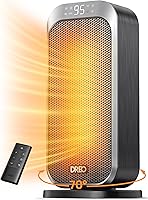
The DREO 1500W Thermostat Heater suits a dry indoor room where you want thermostat control and air movement. Its 6 ft cord gives you a clear placement limit, and DREO expressly requires direct wall connection.
Its ECO mode adjusts between 1000W and 1500W, while 70° oscillation helps spread warm airflow. Skip it if your intended spot requires extra cord length or puts the heater too close to furniture.
Don't plan circuit use around the idea that a thermostat will keep the heater off most of the time. It can call for sustained heat when the room is cold.
The Kill A Watt Meter serves a different buyer: someone tracking electricity use on other compatible plug-in appliances. It records kilowatt-hours, forecasts costs, and retains accumulated readings after a power interruption.
Skip it as a heater safety accessory, and keep the heater connected directly to the wall. An energy reading doesn't establish outlet condition or circuit capacity.
For heater budgeting, use its wattage, expected running time, and your electricity rate instead. Read how many watts a space heater uses and how much it costs to run a space heater for the calculation.
What should you do if a heater cord gets hot?
Turn the heater off and stop using it. Unplug it only if you can do so safely, and have a hot outlet checked by a qualified electrician.
Don't handle melted plastic, damaged plug blades, or exposed wire. If you see smoke or fire, or smell burning that suggests an electrical fire, leave and call emergency services.
Don't treat cooling down as a repair. Heat damage or a poor connection can remain after the cord or outlet returns to room temperature.
Before each use, check the cord and keep the plug accessible. For cleaning, switch the heater off, unplug it, let it cool, and follow its manual for removing dust from vents.
Keep water and cleaning sprays away from electrical parts. Don't open the heater or alter its cord to solve a reach problem.
Which heater fits a dry home office?
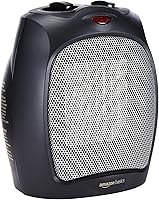
Choose a compact heater if you need local warmth and can provide safe placement near an outlet. The Amazon Basics Ceramic Heater suits a dry office where simple controls matter more than oscillation.
It offers an adjustable thermostat and fan-only mode, plus tip-over and overheat protection. Its non-oscillating design makes it a better fit when you want airflow aimed in one direction.
Skip it for bathrooms, laundry rooms, and other high-moisture spaces, which Amazon Basics excludes. A compact body also doesn't make it suitable beneath a crowded desk beside paper, curtains, or a chair.
Set any heater on a stable surface allowed by its manual, with at least 3 ft from combustible items and any greater clearance the manual requires. Keep children and pets away from it.
Turn portable heaters off before sleeping or leaving the room. For room-specific advice, see best space heaters for bedrooms and whether you can leave a space heater on overnight.
What should you choose instead of a space heater extension cord?
Choose the location first, then the heater. If you can't plug a space heater directly into a suitable wall outlet while maintaining clearance, don't use an extension cord to make that position work.
Pick the DREO for thermostat control and oscillation where its cord reaches safely. Pick the Amazon Basics for a dry room where you want compact, directed heat and straightforward settings.
Choose the KAIWEETS only for basic outlet checks, and the Kill A Watt for tracking other compatible appliances. Neither tool repairs an outlet or makes an unsafe heater setup acceptable.
If you still need to compare heater types, start with our best space heaters for home guide. Before switching one on, use the space heater safety guide to check the final position and clearances.
Frequently asked questions
Can you plug a space heater into an extension cord?
No, plug a space heater directly into a suitable wall outlet. An extension cord adds wiring and connections that can overheat under a heater's sustained load, so choose another position if the heater's own cord cannot reach without stretching or crossing a walking path.
Can I use a heavy-duty extension cord with a space heater?
Don't use a heavy-duty extension cord with a space heater; use a suitable wall outlet directly. A thick cable doesn't prevent loose connections, damage, or heat buildup, and a lower heat setting doesn't override the heater's instructions against extension cords or power strips.
Can a space heater be plugged into a power strip?
No, connect the heater directly to a suitable wall outlet rather than a power strip or surge protector. Surge protection doesn't solve overheating from a sustained electrical load, and plugging the heater into an otherwise empty strip still adds another device and connection to the path.
What should I do if the space heater plug or outlet gets hot?
Turn the heater off and unplug it only if you can do so safely. Stop using the outlet until a qualified electrician checks it; if there's smoke, fire, or a burning smell suggesting an electrical fire, leave the area and call emergency services rather than handling damaged parts.