Best Space Heaters for Home: Oil-Filled, Ceramic, Infrared
The best space heater for quick warmth is a ceramic model: choose the Lasko for straightforward controls or the DREO for ECO mode and a shorter body. Choose the DREO radiator for fan-free warmth during longer sitting sessions, or the Dr Infrared DR-968 for a wheeled cabinet heater with a blower.
On this page (10 sections)
- What type of space heater is best for your home?
- How should you match a space heater to a room?
- Which controls make a space heater easier to live with?
- How much electricity does a space heater use?
- What safety features should you look for?
- How should you set up a space heater the first time?
- How do you care for a space heater between uses?
- What mistakes make a space heater less useful?
- How do you choose the best space heater for your needs?
- Which space heater should you choose?
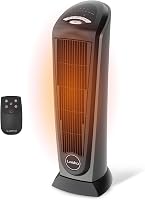
The best space heater for quick warmth is a ceramic model: choose the Lasko 751320 for straightforward controls or the DREO ceramic heater for ECO mode and a shorter body. For longer sitting sessions without fan airflow, choose the DREO oil-filled radiator.
The Dr Infrared DR-968 suits buyers who prefer a cabinet heater with wheels and a blower. Its infrared label doesn't mean it runs without moving air.
Start with how you'll use the heater: a short spell at your desk, an evening in the living room or warmth before bed. Then check that you have a suitable outlet and enough clear floor space.
All 4 models reach the same maximum electrical input. Their main differences are how they deliver warmth, how you control them and how easily they fit your routine.
What type of space heater is best for your home?
Ceramic suits quick warmth, oil-filled suits longer sessions without fan airflow, and infrared needs a closer look at the heating system. The DR-968 combines infrared heat with PTC heating and a blower, so it belongs in a different noise and airflow discussion from a fan-free radiator.
| Heater type | How it provides warmth | Best match | Main tradeoff |
|---|---|---|---|
| Ceramic | A ceramic element heats air moved by a fan | Short sessions and warmth soon after switch-on | Fan sound and moving air |
| Oil-filled radiator | An element heats sealed oil, which warms the metal body and surrounding room | Longer sessions at a desk or in a seating area | Slower response when starting cold |
| Infrared with a blower | Infrared elements provide radiant heat while a blower moves warm air | Buyers who want a cabinet-style heater with mixed heat delivery | More bulk and some fan sound |
An oil-filled radiator also warms nearby air through natural convection. “Radiant” doesn't mean its warmth stays only within a narrow line in front of it.
Likewise, ceramic describes the heating element, not a promise about room size or running cost. Two ceramic heaters can have different controls, body sizes and airflow patterns.
Think about the discomfort you're solving before choosing a type. Cold hands during a brief desk session call for a different response from a room that slowly cools throughout an evening.
If your whole home stays cold, a portable heater may only make one occupied area more comfortable. It can't repair poor insulation, stop drafts or replace a heating system that needs attention.
Is a ceramic space heater right for you?
A ceramic space heater suits short, attended sessions when you want warm airflow soon after switching it on. It's a practical choice for a home office, reading chair or living room where you don't mind a fan.
Oscillation sweeps the airflow across a wider area. It helps when 2 nearby seats need warmth, but it can make the stream feel less constant if you want it aimed only at you.
A fan can also carry warmth around furniture poorly placed in its path. Choose the heater's safe position first, then arrange your seat so you benefit from the airflow without crowding the outlet grille.
Lasko 751320: choose it for straightforward room-to-room use
Choose the Lasko 751320 if you want a ceramic tower with a thermostat and familiar remote controls. Its carry handle makes sense for someone moving a heater between a home office and a living room.
The programmable thermostat and 7-hour timer cover common attended uses, such as a work session or an evening on the couch. Set the timer for the time you expect to be there, then turn the heater off when you leave.
Its body measures 8.3 in deep, 7.25 in wide and 22.5 in high. That gives you a narrow tower to place, but the required clear space around it will be much larger than its base.
Lasko describes the housing as cool-touch and identifies the heater as ETL listed. Neither feature makes it a safe object for a child or pet to approach.
Skip the Lasko if confirmed tip-over protection is a buying requirement. Its supported safety features include overheat protection, but tip-over protection isn't established here.
Also choose a different type if moving air is what bothers you about your current heater. A remote and timer won't change the feel of fan-driven heat.
DREO ceramic: choose it for automatic power adjustment
Choose the DREO 1500W Thermostat Heater if you want a shorter ceramic heater with ECO control. It suits a desk or seating routine where the room needs more heat at first and less once it feels comfortable.
Its ECO mode selects between 1,000W and 1,500W based on room temperature. That gives it a clear control advantage for buyers who prefer less manual switching between heat settings.
DREO states a noise level of 34 dB and coverage of 270 sq ft. Use those figures as selection guides, since room acoustics, drafts and placement affect what you experience.
The body is 15.79 in high and about 5.9 in wide and deep. It's the shorter ceramic option here, which may make it easier to fit visually into a small room.
DREO identifies this model as ETL certified, with tip-over and overheat protection. Its automatic power-off function after 24 hours without interaction is a backup safeguard, not a reason to leave it running.
Skip this DREO if you want warmth without a fan. Its quiet-operation claim doesn't mean silence, and a low hum may still stand out in a very quiet room.
For a noise-focused shortlist, see our guide to quiet space heaters. Pay attention to the kind of sound you dislike, including airflow, control beeps and switching clicks.
Is an oil-filled space heater right for you?
An oil-filled radiator suits longer, attended sessions when you want warmth without a fan pushing air. Give it time to warm up rather than expecting an immediate stream of hot air.
This type stores heat in its oil and metal body. It can keep releasing warmth after the element switches off, which also means it won't cool down as quickly as you may expect.
That slower response suits a settled routine better than a quick stop in a cold room. Someone sitting at a desk for several hours has more reason to choose it than someone entering a room for a few minutes.
DREO radiator: choose it for a settled work or evening routine
Choose the DREO Oil Filled Radiator if airflow bothers you and you can give the heater a regular, safe floor position. Its controls suit someone who wants to adjust warmth from a desk or chair.
The lower power settings give you options once the room no longer needs full heat. ECO mode adds automatic control, but it doesn't establish a fixed amount of electricity savings.
The remote, large LED display and touchscreen offer several ways to change settings. Mute and screen-off modes are useful when beeps or a bright display would distract you during an evening.
It also includes a child lock and 24-hour timer. A control lock helps prevent setting changes, but it doesn't keep someone away from hot surfaces or make unattended operation appropriate.
At 17.6 lb, this radiator is better suited to rolling between nearby rooms than frequent carrying. Its wheels and handles help on a clear, level route, though steps and thick rugs still need thought.
The body measures 12.83 in deep, 9.92 in wide and 26.14 in high. Plan its parking place around both clearance and the walking route through the room.
DREO identifies the radiator as ETL listed, with tilt and overheat protection. Keep children and pets away even with those safeguards.
Skip it if you want instant warm airflow or need to carry a heater up stairs often. A smaller ceramic model is a better match for brief sessions and frequent moves.
Oil-filled doesn't mean you add oil during normal use. Read how an oil-filled radiator works for a closer explanation of the sealed system.
Is an infrared space heater right for you?
An infrared heater suits buyers who want radiant heat, but the DR-968 also uses a blower. Choose it for its complete design rather than expecting every infrared model to behave alike.
Radiant heat warms surfaces and people it reaches, while warm airflow helps spread heat through the space. Furniture and room layout still affect where the warmth feels useful.
Dr Infrared DR-968: choose it for a cabinet heater on wheels
Choose the Dr Infrared DR-968 if you want a freestanding cabinet heater that can roll between nearby positions. It suits a room where you can leave a clear floor area around a larger unit.
Its maximum input is 1,500W, and Dr Infrared gives a coverage figure of 576 sq ft. That larger figure doesn't mean it can supply more electrical energy than the other heaters at full power.
The thermostat adjusts from 50°F to 85°F, and the automatic shutoff timer runs up to 12 hours. These controls suit someone who wants to manage heat from a chair without repeatedly approaching the unit.
Dr Infrared states a blower noise level of 39 dB. Don't use that figure alone to rank it against another brand, since measurement distance and operating conditions may differ.
The cabinet measures 13 in deep, 11 in wide and 16 in high, and it weighs 19 lb. Casters help with floor-level moves, but this isn't the pick for someone who needs a light heater to carry often.
It includes tip-over and overheat protection, plus a lifetime filter. Follow the manual's cleaning directions to keep the air path clear.
Skip it if you need fan-free operation, a slim tower or easy lifting. Its cabinet shape and blower are central to how it fits and feels in a room.
How should you match a space heater to a room?
Match a heater to the room's heat loss and layout, not just its floor area. A closed, insulated room is easier to warm than an open space with the same measured area.
Measure length and width to estimate floor area, then note ceiling height. Tall ceilings add air volume that a simple square-foot figure doesn't describe.
Next, look for heat escape routes: open stairs, doorways, drafty windows and poorly sealed exterior doors. A heater near one chair may improve comfort even when it can't bring the whole connected space to your target temperature.
Use coverage figures to narrow your choices, rather than rank heating power. The figures aren't a shared measurement standard across these 4 products.
Which room details change the choice most?
Time spent in the room and available placement matter as much as room size. A heater that fits your routine poorly may sit unused even if its coverage figure looks suitable.
| Your situation | Start with | Check before buying |
|---|---|---|
| Brief desk or reading sessions | Ceramic heat | Safe airflow path and acceptable fan sound |
| Several hours in one room | Oil-filled or thermostatic ceramic heat | Warm-up time and control preferences |
| Two nearby seating positions | Oscillating ceramic heat | Whether furniture blocks the sweep |
| Frequent moves between floors | A model you can comfortably carry | Weight, handle and safe cooling time |
| A larger living room | A heater suited to the occupied zone | Drafts, open doorways and realistic expectations |
Don't tuck a heater behind a couch to keep it out of view. Hidden placement can block heat flow and make it harder to notice nearby fabric or a damaged cord.
For a room-by-room shortlist, see our guides to space heaters for large rooms and space heaters for bedrooms.
For a garage, start with space heaters for garages and confirm the unit is suitable for that location. An indoor heater shouldn't be assumed suitable around moisture, workshop debris or flammable fumes.
Which controls make a space heater easier to live with?
A thermostat and usable heat settings matter more than the longest timer or highest temperature number. They help you keep the room comfortable after the initial chill is gone.
A thermostat set higher doesn't increase the heater's maximum output. If you're cold, choose an appropriate heat mode rather than treating the temperature control as a speed control.
The sensor reads conditions near the heater, which may differ from those at your chair. Keep the heater safely positioned, then adjust the target gradually until the occupied area feels comfortable.
ECO modes can reduce manual adjustments by changing heat operation as conditions change. Their value depends on the room reaching a temperature where less heating is needed.
For a closer comparison of control styles, see our guide to space heaters with thermostats.
A remote helps if reaching floor-level controls is awkward. Make sure you can still see enough of the heater to notice blocked vents, moved furniture or a pet approaching it.
Timers are most useful for limiting an attended session. Don't use a long timer as permission to sleep beside a running portable heater or schedule heat in an empty room.
How much electricity does a space heater use?
Electricity use depends on power draw and active heating time. A 1,500W heater operating continuously for 1 hour uses 1.5 kilowatt-hours, regardless of whether its heat comes from ceramic elements, quartz or an oil-filled body.
For a rough estimate, use:
Kilowatts × hours of active heating × your rate per kilowatt-hour = energy cost.
For example, 4 hours at continuous full power uses 6 kilowatt-hours. Multiply that by the rate on your electricity bill to estimate the energy charge.
A thermostat can reduce active heating time once the room reaches its target. In a drafty room that never gets warm enough, the heater may spend much longer at high output.
Lower power doesn't always mean lower total energy use for the same comfort. A lower setting that runs longer can use as much energy as a higher setting that cycles off sooner.
Oil-filled radiators don't create free heat after switching off. They release energy stored earlier in the warm oil and metal.
The most useful saving habit is heating the occupied space only as needed. Keep the target comfortable rather than excessive, and address drafts where you can do so safely.
Our guides explain how many watts a space heater uses, whether space heaters use a lot of electricity and how much it costs to run one.
What safety features should you look for?
Look for overheat protection, tip-over protection and clear placement instructions, then choose a model whose operating rules you can follow at home. Safety features are backups for problems, rather than a substitute for careful use.
Check certification information for the exact model. A certification mark doesn't make every location, outlet or use suitable.
Cool-touch housing describes part of a heater's construction, not permission to touch its grille. Keep children and pets away from the entire unit.
A child lock protects controls from changes. It doesn't create a barrier around the heater or stop someone from covering it.
Plug the heater directly into a suitable wall outlet. Don't use an extension cord, power strip or improvised adapter to reach a preferred corner.
Also consider what else runs on the same circuit. A vacuum, kettle or other high-draw appliance can add load even when it uses a different outlet.
Turn the heater off before sleeping or leaving it unattended. The same rule applies when the heater has a timer, thermostat or automatic power-off feature.
Our space heater safety guide covers everyday precautions. For specific questions, see whether you can plug a space heater into an extension cord and whether to leave a space heater on overnight.
How should you set up a space heater the first time?
Set up the heater with the power off, using the manual's placement and assembly instructions. Choose a stable, level position with the required clearance on every side.
Remove packaging and inspect the cord, plug, housing and any wheels or feet. Don't operate a unit that arrives damaged or has parts fitted incorrectly.
Check the full path between heater and outlet. The cord shouldn't cross a walkway, sit under a rug or be pinched behind furniture.
Look beyond the heater's base when checking clearance. Curtains can move, bedding can fall and a chair can slide back into space that looked empty.
Use the heater while you're awake and nearby during its first operating session. Learn the controls and confirm you can turn it off without reaching across a hot outlet grille.
Start with a reasonable temperature target, then let the room respond before changing it again. Repeated adjustments make it harder to judge whether the chosen setting is comfortable.
Check for unusual smells, visible damage, a loose plug or signs of overheating at the outlet. Stop using the heater if something seems wrong, and have an electrical problem checked rather than working around it.
Before moving the unit, switch it off, unplug it and let it cool as the manual directs. Don't pull it by its cord.
How do you care for a space heater between uses?
Keep the heater clean, dry and clear of dust, following its manual for every cleaning task. Unplug it and let it cool before touching grilles, filters or the housing.
Dust on air openings can restrict airflow. Use only the cleaning tools and methods the manufacturer permits, and don't spray cleaner into the unit.
If a filter is removable, follow the model's instructions for cleaning and refitting it. Don't assume every heater has a washable filter.
An oil-filled radiator needs exterior cleaning, not routine oil changes. Don't open its sealed body or attempt to refill it.
Look over the plug and cord during regular cleaning. Cracks, fraying, discoloration or a loose connection are reasons to stop using the heater.
Store a cooled heater in a dry place where its cord won't be crushed. Keep the manual with it so clearance and cleaning directions are easy to find next season.
What mistakes make a space heater less useful?
The biggest mistakes are choosing by coverage alone, blocking heat flow and expecting controls to overcome heat loss. Fix the cause of poor comfort before replacing one heater with another of the same maximum input.
Buying the biggest coverage number
A broad coverage claim doesn't establish stronger heat output. Compare the room's layout and insulation before assuming one of these models can heat far more space than the others.
Setting the thermostat to its maximum
A higher target tells the heater to keep seeking more warmth. It doesn't raise the maximum wattage or solve a draft that carries heat away.
Choosing a radiator for a brief visit
A radiator's slower warm-up is a poor match for a few minutes in a cold room. Choose ceramic airflow when getting warmth quickly is the main goal.
Choosing an infrared model to avoid a fan
Some infrared heaters include blowers, including the DR-968. Check the whole heating system rather than relying on the type name.
Using furniture to hide the heater
A heater needs clear space to work safely. If its only possible position is under a desk crowded with paper or beside hanging fabric, reconsider the location before buying.
Treating automatic features as supervision
A timer can't notice a blanket dropped beside the heater. Turn it off when your attended session ends.
How do you choose the best space heater for your needs?
Choose by your longest regular heating session, then rule out models that don't fit your floor space, outlet position or sound preferences. This is more useful than chasing the most features.
Best space heater choices by daily routine
For quick warmth, start with the ceramic models. Choose Lasko for straightforward operation and carrying between rooms, or DREO if automatic power adjustment and a shorter body matter more.
For a settled evening without airflow, choose the DREO radiator. Allow time for warm-up and make sure moving its weight won't become a daily problem.
For a wheeled cabinet heater with a blower, choose the DR-968. Leave room for its body and don't base the decision on its coverage figure alone.
Before ordering, answer 4 practical questions:
- Can it sit safely within reach of a suitable wall outlet?
- Will its heat delivery suit the length of your sessions?
- Can you move and store it without awkward lifting?
- Will its fan, controls and display suit the room?
If an answer is unclear, resolve that detail before comparing smaller extras. A useful remote can't make up for an unsafe placement or airflow you dislike.
Our guide to choosing a space heater covers type, wattage and room size in more depth. For the main difference between quick airflow and slower fan-free warmth, see oil-filled vs ceramic heaters.
Which space heater should you choose?
Choose the Lasko 751320 for straightforward ceramic heat you can carry between rooms, or the DREO ceramic heater for automatic power adjustment in a shorter body. Choose the DREO radiator for longer sessions without fan airflow, and the DR-968 when a cabinet heater with wheels suits your room.
The best space heater is the one you can place safely and use comfortably during your actual routine. If no model fits within reach of a suitable outlet with clear space around it, solve the placement problem before buying.
Once you've chosen, use our space heater safety guide to check the setup before switching it on.
Frequently asked questions
What type of space heater is best for a home?
A ceramic heater is a useful choice for quick warmth while you're nearby. Choose an oil-filled radiator for longer sitting sessions without fan airflow, or an infrared model if its heat delivery suits your room.
Check each model's controls, floor-space needs and safety instructions before choosing.
Are oil-filled heaters cheaper to run than ceramic heaters?
Oil-filled heaters are not automatically cheaper to run than ceramic heaters. At the same power draw and active heating time, they use the same amount of electricity.
Running cost depends on your electricity rate, heat setting and how often the thermostat switches the element off.
How many watts should a space heater have?
All 4 heaters here have a maximum input of 1,500W, but you may need a lower setting once the room feels comfortable. Match the heater to the room and available circuit.
Plug it directly into a suitable wall outlet, and follow its manual's electrical requirements.
Can a space heater heat a large room?
A space heater can supplement heat in a large room, but coverage depends on insulation, ceiling height, drafts and open doorways. A brand's coverage figure is a starting point.
If warmth escapes faster than the heater can replace it, a higher thermostat setting won't solve the problem.
Is it safe to leave a space heater on overnight?
Turn a portable space heater off before sleeping or leaving it unattended. A timer, thermostat or automatic shutoff doesn't replace supervision.
Use it while you're awake, follow the manual's clearance rules, and keep bedding, curtains and other materials that can burn away from the heater.