Space Heater Safety: What Your Manual and Fire Groups Say
Space heater safety starts with at least 3 feet of clearance from anything that can burn, a stable surface, and a direct wall outlet connection. Follow the manual, keep smoke alarms working, and turn the heater off before leaving the room or sleeping.
On this page (9 sections)
- What are the main space heater safety rules?
- Can you plug a space heater into an extension cord?
- Should you turn a space heater off when you leave?
- Do smoke and carbon monoxide alarms help with heater safety?
- What should you check before using a heater?
- How should you choose and place a space heater?
- How do you clean and store a space heater?
- What should you do if a heater seems unsafe?
- Which choices make sense for space heater safety?
Space heater safety starts with clear space, a stable surface, and a direct wall outlet connection. Keep the heater at least 3 feet from anything that can burn, follow any stricter manual instructions, and turn it off before leaving the room or sleeping.
Choose the location before buying the heater. If you can't keep furniture, bedding, people, and pets clear of that spot, a smaller heater or extra safety feature won't solve the placement problem.
What are the main space heater safety rules?
Give a portable heater space, stable support, and supervision every time you use it. The US Fire Administration's portable heater guidance calls for at least 3 feet from anything that can burn, a solid, flat surface, and shutoff before leaving or sleeping.
Keep curtains, clothing, paper, bedding, and furniture outside that space. Follow the manual's directions for every side of the heater, including any greater clearance at the front or above it.
Use a spot away from door swings and walking routes. Keep children and pets clear, and never place the heater on a bed, sofa, or other soft surface.
Don't drape anything over it or use it to dry gloves and towels. A heater that fits beneath a desk may still be too close to your legs, a wastebasket, or hanging clothing.
Which space heater safety features should you choose?
Choose tip-over and overheat protection, then check whether the heater suits the room. Those features can shut the unit down under certain conditions, but they don't prevent every fire or contact burn.
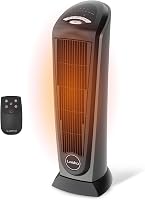
The Amazon Basics Ceramic Heater suits someone who wants portable warmth in a dry home office or living area while they're present. It has an adjustable thermostat, 1500W high heat, 900W low heat, and a fan-only setting.
Skip it for bathrooms, laundry rooms, and other high-moisture areas, which Amazon Basics excludes. Also skip it if the only available spot puts its cord across a walkway or the heater within reach of bedding.
Its non-oscillating design suits a fixed heating direction. For other formats, compare our space heaters for home after you've identified a suitable location.
Can you plug a space heater into an extension cord?
Plug a portable heater directly into a wall outlet, without an extension cord or power strip. These extra connections can overheat under a heater's sustained electrical load.
The original cord should reach without stretching or crossing a walking route. Don't run it beneath rugs, through doorways, or behind furniture that could pinch it.
Avoid sharing the outlet with another high-power appliance, and remember that separate outlets can share a circuit. If a breaker trips during heater use, stop and address the cause rather than repeatedly resetting it.
Move the heater to a suitable location instead of adding cord length. Our guide to plugging a space heater into an extension cord explains the connection risks in more detail.
A lower heat setting doesn't make a damaged outlet or power strip acceptable. Inspect the connection regardless of which setting you plan to use.
Should you turn a space heater off when you leave?
Turn the heater off before leaving the room or going to sleep, even for a short break. A thermostat controls temperature; it doesn't confirm that a blanket hasn't fallen nearby or that a pet hasn't moved something against the heater.
Use the shutoff control described in the manual. Follow its unplugging instructions, let the unit cool before moving it, and pull the plug by its body rather than tugging the cord.
For bedrooms, warm the room while you're awake and present, then switch the heater off before bed. See our guide to leaving a space heater on overnight before making it part of a bedtime routine.
Don't arrange remote controls or schedules so the heater starts in an empty room. Someone should be there to check the space around it before heat begins.
Do smoke and carbon monoxide alarms help with heater safety?
Working smoke alarms warn you about smoke, while carbon monoxide alarms detect a separate hazard. Neither makes unsafe heater placement or unattended operation acceptable.
The US Fire Administration's smoke alarm guidance recommends smoke alarms on every level and inside and outside sleeping areas, with monthly checks using the alarm's test function.
Electric space heaters don't burn fuel and don't produce CO during normal operation. Fuel-burning equipment elsewhere in the home can create that hazard, so choose alarm coverage for the whole home.
The First Alert suits someone who wants battery-operated combination protection without adding alarm wiring. Its end-of-life warning helps identify when the unit needs replacement, but you still need regular function checks and battery care under its instructions.
Skip this choice if your home requires a hardwired or interconnected replacement unless you confirm it meets those requirements. Don't remove a required alarm system simply because a battery-operated unit is easier to mount.
The X-Sense SC07 suits someone who wants a 10-year sealed battery and standalone smoke and CO detection. It uses photoelectric smoke and electrochemical CO sensors, and its mounting hardware is included.
Skip the SC07 if you need alarms that communicate with one another: it has no wireless interconnection, Wi-Fi, or base station connection. A sealed battery removes routine battery swaps, but it doesn't remove monthly checks, cleaning, or eventual alarm replacement.
Place either alarm according to its instructions and local requirements. Don't assume a single combination unit covers every bedroom or level.
What should you check before using a heater?
Check the heater, cord, plug, and outlet before each use, especially after storage. Look for cracks, fraying, bent plug blades, discoloration, or debris blocking the air openings.
The plug should fit securely without wobbling or falling out. Don't bend its blades to improve the fit or keep using a socket that feels loose.
A plug-in outlet checker can identify some wiring faults, but it can't approve an outlet for heater use. A normal result doesn't reveal every loose connection, hidden defect, or overloaded circuit.
The KAIWEETS suits someone checking North American 3-wire 120V outlets for common wiring faults. Its LCD shows wiring status and voltage, while auto hold lets you read a result after removing it from an awkward spot.
Skip it for unsupported outlet types or as a substitute for an electrician's inspection. Its GFCI function can interrupt power, so read the directions and consider connected equipment before using that button.
If the heater's plug or outlet becomes hot, stop using it and unplug it only if safe. Have a qualified electrician address outlet damage, repeated breaker trips, or suspected wiring problems.
How should you choose and place a space heater?
Choose a heater that fits the room and its required clear space, rather than buying by cabinet size alone. A compact body can still need a large open area around it.
Measure the intended spot, check the cord route, and account for doors, recliners, and curtains in their normal positions. Leave controls accessible so you can turn the unit off without reaching across hot surfaces.
Use our space heater buying guide to compare heater types and controls. Our guide to space heater size for a room helps you avoid expecting one portable unit to warm an unsuitable space.
A thermostat helps maintain a chosen temperature, while low heat offers another output setting. Neither changes the clearance rules or makes the heater suitable for damp rooms.
Oil-filled models need the same attention to placement, hot surfaces, and supervision. Read whether oil-filled heaters are safe before choosing that format.
How do you clean and store a space heater?
Clean a heater only when it's switched off, unplugged, and fully cool. Follow the manual's method for removing dust from the intake, outlet, and outer surfaces.
Don't spray cleaner into vents, immerse the heater, or open its housing unless the manual directs you to do so. Dust buildup needs attention, but blocked vents aren't a reason to remove protective guards.
Before storage, let the unit cool and check the cord for damage. Keep it dry, protect it from crushing, and avoid wrapping the cord tightly around the body.
What should you do if a heater seems unsafe?
Stop using it if you notice smoke, melting, discoloration, or an unusual burning smell. Don't keep restarting a unit that shuts down repeatedly; check its instructions and contact the manufacturer.
Some surfaces become hot during normal use, so don't use touch alone to judge a fault. Keep hands away from hot parts and investigate changes in operation rather than dismissing them.
If there's smoke or fire, get everyone out and call emergency services from a safe place. Don't pour water on an electrical fire or delay leaving to retrieve the heater.
Which choices make sense for space heater safety?
For space heater safety, buy around the location you can supervise. Choose the Amazon Basics for portable heat in a dry room with proper clearance; choose another approach if you can't provide that space.
Choose First Alert for battery-operated combination alarm coverage, or X-Sense SC07 if a sealed battery and standalone operation suit your home. Use KAIWEETS for supported wiring checks, and call an electrician for signs of outlet trouble.
Before adding bedroom heat, review the overnight safety guidance. Make shutting the heater off part of leaving the room, just as checking its surroundings is part of switching it on.
Frequently asked questions
How far should a space heater be from furniture?
Keep a space heater at least 3 feet from furniture, bedding, curtains, paper, and other items that can burn. Follow any greater clearance in its manual, including directions for the front, sides, and top, and leave enough room that doors or passing people won't move objects into that space.
Can I leave a space heater on while I sleep?
Turn a portable space heater off before sleeping or leaving the room. A thermostat, timer, or automatic shutoff doesn't replace supervision, so warm the bedroom while you're awake and present, then switch the heater off before bed and follow the manual's directions for unplugging and cooling.
Is it safe to plug a space heater into a power strip?
No. Plug a portable space heater directly into a wall outlet without an extension cord, power strip, or multi-outlet adapter.
Choose a location the original cord can reach without stretching, and stop using the heater if the connection becomes hot, loose, discolored, or damaged.
Should a space heater have tip-over protection?
Choose tip-over protection and overheat protection, then use the heater with the same care you would without those features. They address specific faults, but they don't clear nearby bedding, repair a loose outlet, or make unattended use safe; placement and supervision still matter every time.