Oil-Filled Heater vs Ceramic Heater: Which Is Better? (October 2026)
For oil filled heater vs ceramic, choose oil-filled for quiet, steady warmth during longer stays and ceramic for quick personal comfort from warm airflow. Match the heater to your routine, floor space, and controls rather than expecting either type to guarantee lower bills.
On this page (9 sections)
- Oil-filled heater vs ceramic: which feels warmer sooner?
- Which type fits your room and routine?
- Which heater is quieter and easier to live with?
- Does oil-filled or ceramic cost less to run?
- Which of these 3 heaters should you buy?
- How should you set up either heater?
- Which safety features matter most?
- How do you care for the heater and avoid common mistakes?
- Oil filled heater vs ceramic: make the final choice
Choose oil-filled for quiet, steady warmth during longer stays and ceramic for quick personal comfort from warm airflow. The oil filled heater vs ceramic decision starts with how long you'll use the room and whether you want a fan blowing.
A radiator makes sense beside a work area you occupy for hours. A ceramic tower suits shorter sessions when you want warmth to reach your chair soon after switching it on.
Both types are room heaters, not fixes for drafts or an open floor plan. Compare other formats in our guide to the best space heaters if neither matches your space.

Oil-filled heater vs ceramic: which feels warmer sooner?
A fan-driven ceramic heater usually feels warm sooner near your seat, while an oil-filled radiator takes time to heat its oil and metal body. That makes ceramic the stronger choice for a brief morning desk session.
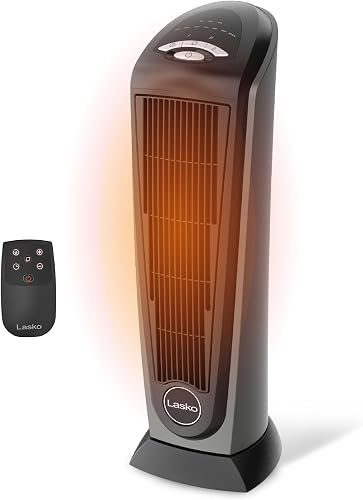
Ceramic describes the heating element, not every part of the design. The Lasko here uses a fan to send warmed air into the room, so you feel moving warmth rather than waiting only for the surrounding air to warm.
An oil-filled radiator transfers heat from an electric element through sealed oil into its metal body. It warms the space through radiant heat and natural air movement, without needing a directed stream of air.
Neither type adds heat beyond its electrical input. A cold, drafty room can stay uncomfortable with either design if heat escapes as fast as the heater supplies it.
Oil-filled vs ceramic heaters for short or long stays
Choose ceramic when you need comfort during a short, occupied session. Pointing its airflow toward your seating area, within the manual's placement rules, can make a short stay more comfortable.
Choose oil-filled when you'll remain in the room long enough for gradual warmth to become useful. It's less appealing if you expect to switch it on, feel immediate heat, and leave a few minutes later.
Oil-filled radiators also cool gradually after the element switches off. That stored warmth smooths the change between heating cycles, but it comes from electricity already used.
Read how an oil-filled radiator works if you want a closer look at the heating cycle.
Which type fits your room and routine?
Choose by room use and heat loss before comparing extra controls. A closed home office is easier to heat than a similar-size area connected to a cold hallway or stairwell.
For desk work, decide whether you want warm air on your body or background warmth across the space. Ceramic suits the first goal; oil-filled suits the second when you can allow warmup time.
For a shared sitting area, oscillation can move warm airflow between seats. A radiator suits people who prefer no fan breeze, provided its safe position leaves room for heat to circulate.
Neither choice is ideal for heating several connected rooms from one outlet. Close doors to unused areas where practical, and address obvious drafts without blocking any required ventilation.
Who should skip a ceramic tower?
Skip the ceramic tower if moving air distracts you or you want a fan-free workspace. A short warmup advantage won't help if you keep switching it off because the airflow bothers you.
Also skip it if the only available position puts it beside curtains or in a busy walkway. A narrow tower still needs the full clearance around it.
Who should skip an oil-filled radiator?
Skip a radiator if you mainly need brief bursts of warmth or carry the heater between floors every day. Its slower heat delivery and heavier body work against those routines.
It also needs a permanent clear spot while hot and cooling. A room where furniture, laundry, or children regularly crowd that spot is a poor match.
Which heater is quieter and easier to live with?
Oil-filled is the better fit for avoiding fan noise; ceramic is easier to justify when airflow is useful. Consider the sounds and controls you'll notice during your actual routine.
Fan-free heating can still include occasional clicks or sounds as metal warms and cools. Don't choose a radiator expecting absolute silence at every moment.
A fan may fade into the background during conversation yet stand out during reading or focused work. Lasko describes its ceramic operation as quiet, but personal tolerance for moving air still matters.
For a bedroom used while you're awake, also consider display light and control sounds. DREO includes mute and screen-off modes, which suit a room where a bright control panel would distract you.
A remote helps if the safe heater position is across the room. Manual controls suit someone who sets the heat before sitting down and rarely changes it.
Turn portable heaters off before sleeping or leaving the room. Our guide to leaving a space heater on overnight explains why a timer doesn't replace supervision.
Does oil-filled or ceramic cost less to run?
Neither type is automatically cheaper at the same power draw and operating time. All 3 heaters here have a maximum input of 1500W, equal to 1.5 kilowatts.
If a heater draws that amount continuously for 2 hours, it uses 3 kilowatt-hours. Multiply that energy use by your electricity rate to estimate the cost.
Thermostat cycling changes the total because the heating element may switch off once the room reaches the target. Wall-clock time alone can therefore overstate consumption if you assume full power throughout.
Lower power settings reduce draw while active, but they also deliver heat more slowly. If the room keeps losing more heat than a low setting can supply, it won't reach your target temperature.
A thermostat set much higher than needed can extend heating time. Use a comfortable target, close unnecessary doors, and stop heating once you leave the space.
Eco controls can manage operation, but they don't make electricity produce extra heat. Oil-filled heat retention likewise shifts when warmth reaches the room rather than creating energy.
Use the space heater wattage guide to understand power settings, then work through space heater running costs with your own rate.
Which of these 3 heaters should you buy?
Choose the Lasko for short sessions, the DREO for quiet warmth with remote adjustments, or Amazon Basics for manual operation. Their scores reflect different feature sets and buyer needs, so start with the fit.
Lasko 751320 Ceramic Tower: for frequent room changes
The Lasko suits someone who wants warm airflow while working, reading, or sitting on the couch. Wide oscillation helps share that airflow across more than one seating position.
Its remote handles heat, oscillation, and the 7-hour timer. The programmable thermostat lets you select a target rather than relying only on turning the heater on and off yourself.
At 2.5 lb with a carry handle, it's the easiest of these options to lift between rooms. That matters more than wheels if your route includes stairs or raised thresholds.
Choose a radiator instead if fan-driven heat is the feature you want to avoid. The Lasko's convenience comes from moving warm air, so it's a poor fit for someone seeking fan-free background warmth.
DREO Oil Filled Radiator: for longer occupied sessions
The DREO suits a home office where you stay for hours and want to adjust warmth from your chair. Its remote, touchscreen, and LED display offer several ways to change settings.
It provides 600W, 900W, and 1500W modes plus eco mode. Those choices let you match output to a mild chill or a colder room without treating maximum power as the default.
The 24-hour timer provides more timing flexibility than the Lasko's timer, but it doesn't authorize unattended use. Keep any scheduled operation within the manual's instructions and your supervised routine.
At 17.6 lb, the DREO is better rolled across one floor than carried upstairs often. Its wheels and handles help with repositioning after the unit has cooled.
Amazon Basics Oil Heater: for straightforward adjustments
The Amazon Basics radiator suits buyers who prefer physical controls at the heater. You choose a heat setting and adjust the thermostat without a screen or remote routine.
It offers the same 3 power levels as the DREO, with fan-free heat and 7 oil-filled fins. Choose it when those basics cover your needs and extra control options would add little value.
Its 15.4 lb body has caster wheels and a handle for moving between suitable spots. As with the DREO, stairs make portability less convenient than the word “portable” may suggest.
Skip it if you expect frequent adjustments from across the room. Reaching the controls each time can become tiresome when the safest position is far from your chair.
How should you set up either heater?
Choose a clear, stable floor position near a suitable wall outlet before switching it on. Measure the usable space with the manual's required clearances, not just the heater's footprint.
Keep at least 3 feet from items that can burn, and follow any greater distance required by the manual. Check curtains at full movement, bedding that can slip, and chairs that people pull back.
Plug the heater directly into a wall outlet. Avoid power strips and extension cords, as explained in our space heater extension cord guide.
Keep the cord visible and away from walking routes, rugs, and hot surfaces. Stop using the heater if the plug, cord, or outlet becomes unusually hot or shows damage.
Place a ceramic heater where its airflow can reach the occupied area without blowing into furniture. Leave a radiator's fins uncovered and give air room to move around the body.
Follow assembly instructions before use, including fitting any supplied wheels or supports. Keep portable heaters out of wet locations unless the exact model is approved for that use.
For more room-planning advice, read how to choose a space heater. A safe location is part of choosing the right model.
Which safety features matter most?
Tip-over and overheat protection are useful backups, but safe placement and supervision remain essential. No protection makes either heater suitable for drying clothes or sitting against furniture.
DREO and Amazon Basics include tip-over and overheat protection. Lasko includes overheat protection and housing it describes as cool to the touch.
All 3 brands identify these models as ETL-certified or ETL-listed. DREO also includes a child lock, which helps prevent control changes rather than making hot surfaces safe to touch.
Keep children and pets away from operating heaters. Don't assume a cool outer housing means every grille or nearby surface stays cool.
Use our space heater safety guidance for the broader precautions. The exact model's manual governs its assembly, clearance, and operating limits.
How do you care for the heater and avoid common mistakes?
Unplug the heater and let it cool before cleaning, moving, or storing it. Light routine cleaning helps keep air paths clear without opening the housing.
For a ceramic heater, remove surface dust from accessible intake and outlet areas as the manual allows. Don't push objects through grilles or spray cleaner into the unit.
For a radiator, clean around the fins with a soft cloth once cool. The sealed oil isn't fuel that burns away, and it isn't something you top up.
Amazon Basics specifically uses permanently sealed oil that requires no refills. Stop using any radiator that leaks or has damage rather than opening it for a home repair.
Avoid these common mistakes:
- Using the highest thermostat setting as a shortcut: Select the desired room temperature; a higher target doesn't increase a fixed heat setting's output.
- Heating an open passage: Close unnecessary doors instead of expecting one portable heater to warm connected spaces.
- Covering a radiator: Never drape towels or clothes over the fins, even during cooldown.
- Treating a timer as supervision: Stay present while the heater operates and turn it off before sleep.
- Moving it while hot: Allow cooling time, then use the handle or wheels as instructed.
Before seasonal storage, clean the heater and check the cord for damage. Store it dry and protected from knocks, following the manual's position and cord-storage instructions.
Oil filled heater vs ceramic: make the final choice
Pick ceramic for short sessions and useful warm airflow; pick oil-filled for longer stays where fan-free warmth matters. First confirm that your room has a safe outlet and enough clear floor space.
Choose the Lasko when frequent carrying and quick personal comfort shape your routine. Choose the DREO when remote adjustments matter, or Amazon Basics when manual controls are enough.
Once you've chosen the type, compare the best oil-filled radiators or ceramic tower heaters for the controls and layout that suit your room.
Frequently asked questions
Which is better, an oil-filled heater or a ceramic heater?
Choose an oil-filled heater for quiet warmth during longer stays, or a ceramic heater for quick personal comfort from warm airflow. Room heat loss and your routine matter more than the type alone.
Neither design guarantees lower bills, and both need clear space and supervision while operating.
Does an oil-filled heater keep heating after it turns off?
An oil-filled radiator releases stored heat after its heating element stops, so its surface takes time to cool. That warmth comes from electricity used earlier, rather than extra energy created after shutoff.
Let the heater cool before moving or cleaning it, and keep its clearances open during cooldown.
Does a ceramic heater warm a room faster?
A fan-driven ceramic heater usually gives you a quicker feeling of warmth when its airflow reaches you. Whole-room warmup still depends on heater output, room size, insulation, and drafts.
Choose ceramic for short occupied sessions, but don't expect oscillation to make an undersized heater overcome heavy heat loss.
Which type is quieter?
An oil-filled radiator is the better choice if fan noise distracts you, because this type can heat without blowing air. It may still make occasional expansion or control sounds.
The Lasko uses forced air, so choose it when moving air is welcome and some operating sound won't interrupt your work.
Do oil-filled and ceramic heaters cost different amounts to run?
At the same actual power draw and operating time, they use the same amount of electricity. Total cost changes with thermostat cycling, power settings, and your electricity rate.
Oil-filled heat retention can smooth the warmth between cycles, but it doesn't provide free heat or guarantee a smaller bill.