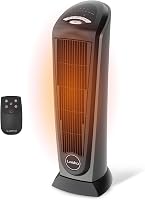
DREO Quiet Space Heater Review: Worth It? (October 2026)
Our DREO space heater review recommends the DREO Quiet Space Heater for small bedrooms and offices where compact size and fine temperature control matter. Choose another heater type if you want fanless warmth or need to heat a large, open space.
On this page (8 sections)
- DREO space heater review: who should buy it?
- How much room can it reasonably warm?
- How useful are the thermostat, timer and oscillation?
- Which alternative suits your daily routine?
- How should you set up the DREO safely?
- What care and use habits matter most?
- Which common buying mistakes should you avoid?
- DREO space heater review: which should you choose?
The DREO Quiet Space Heater is a good choice for small bedrooms and offices where compact size and fine temperature control matter. This DREO space heater review also compares 3 alternatives for buyers who need different controls or a taller tower.
Its strongest use is supplemental warmth where you spend time, such as a home office or reading area. Skip it if you need a heater for a large, connected living space or want warmth without fan noise.
DREO space heater review: who should buy it?
Choose the DREO Quiet Space Heater if you have a small, enclosed room and a clear place to put it. Its remote lets you change settings from your seat, while oscillation helps spread airflow across nearby positions.
DREO Quiet Space Heater

- 1,500 watts
- 41–95°F thermostat
- 70-degree oscillation
- Remote control
Choose this compact tower for a small office or bedroom used while you're awake. Its remote and fine thermostat steps make it a useful fit beside a work or reading area.
Pros
- Thermostat adjusts in 1-degree steps
- Oscillation spreads airflow across nearby seats
- Remote control included
- Child lock, tip-over and overheat protection
Cons
- Less suited to large, open spaces
- Fan-driven heat won't suit buyers seeking fanless warmth
- Lowest claimed noise level does not describe every setting
The heater measures 6.77 x 6.77 x 14.65 in, making it shorter than the Lasko and Pelonis alternatives here. That helps it fit into a room without a tall appliance beside your furniture, though its required safety clearance still matters.
DREO reports sound as low as 34 dB, using a brushless DC motor and winglet fan design to reduce turbulence. That makes it a sensible candidate for quiet work, but the lowest figure doesn't describe every heat setting or room.
Who should skip this DREO space heater?
Skip it if your main goal is fanless heat or whole-space heating across open doorways. A small tower can warm a nearby occupied area without making distant corners equally comfortable.
For a bedroom, think about reading, dressing or warming the room before bed. Choose it for those supervised uses rather than planning to leave it running while you sleep.
A noise-sensitive buyer should also decide whether any steady fan sound will be distracting. Lower sound and no fan sound are different needs, especially in an otherwise silent room.
How much room can it reasonably warm?
Use the DREO's 200 sq ft coverage figure as a room-fit guide, then account for heat loss. A closed office with ordinary ceilings is a better match than a drafty room that opens into a hallway.
Its 1,500-watt PTC forced-air system produces heat and uses a fan to carry that warmth into the room. All 4 heaters here have the same maximum wattage, so a taller body or a larger room claim doesn't mean more maximum heating power.
Measure your room's length and width, then multiply them to find its floor area. Next, consider high ceilings, poorly sealed windows and doors that stay open, since these can make the same floor area harder to heat.
If the room already has central heat and only feels a little cool, supplemental heating has a smaller job to do. Trying to bring a very cold, poorly insulated room up to comfort is a much greater demand.
Read what size space heater you need if room fit is uncertain. For a broader choice between heating styles, start with our best space heaters for home guide.
The DREO 16 Inch Large Room Heater is worth comparing for its operating features, rather than its name. DREO gives conflicting coverage guidance of 107.6–215.3 sq ft and up to 250 sq ft, so don't choose it solely to stretch beyond the Quiet model's room guidance.
How useful are the thermostat, timer and oscillation?
The controls are useful if you want a comfortable target temperature and less reaching for the heater. The thermostat adjusts from 41°F to 95°F in 1-degree steps, and the included remote lets you make changes from your seat.
Small steps help when one setting feels slightly too cool and the next feels too warm. They describe the available settings, rather than promising that every part of the room will stay within a degree of your target.
Start with a moderate temperature and allow the room to respond before changing it. Choosing the highest target doesn't increase the heater's maximum output; it can simply keep it calling for heat longer.
The 70-degree oscillation suits a seating area where you change position or share the room. Fixed airflow makes more sense when one person wants warmth in a specific direction, provided the outlet remains clear.
The 12-hour timer helps limit a supervised heating session. Set it to match the time you'll actually spend in the room, and switch the heater off yourself when you leave.
A thermostat can reduce heating time once the target is reached, but it doesn't make electricity free or lower the maximum draw. Our guides to space heater electricity use and how many watts a space heater uses explain that difference.
Which alternative suits your daily routine?
Choose an alternative when its controls or shape solve a specific problem in your room. None of these models should be selected on tower height alone.
| Heater | Choose it when | Skip it when |
|---|---|---|
| DREO Quiet Space Heater | You want a short tower for quiet work or reading | You want fanless heat or have a large, open layout |
| Lasko 751320 Ceramic Tower | You want remote control of heat, oscillation and a session timer | You need a particularly low temperature target |
| DREO 16 Inch Large Room Heater | You want ECO mode in a compact floor tower | You expect the name to mean greater heating power |
| Pelonis 23 Inch Tower Heater | You want several modes for different parts of the day | You need a short appliance beside your furniture |
Lasko 751320: for a shared sitting room
Choose the Lasko if you want a taller tower with remote access to the main controls. It stands 22.5 in tall, has a 7-hour timer and includes a carry handle for moving it after it has cooled.
Its thermostat range is 60°F to 85°F, which covers ordinary comfort settings but offers less range than either DREO. Skip it if you specifically need a lower target for a cool room.
Lasko includes overheat protection and cool-touch housing, and identifies the heater as ETL certified. Those features support ordinary use but don't make the heater a safe object for children or pets to crowd around.
DREO 16 Inch: for longer work sessions
Choose the second DREO for ECO mode and session controls in a compact floor model. Its 15.83-inch body suits buyers who want a short tower while comparing a different set of operating features.
It has a separate 24-hour auto-off function, alongside the user timer. Neither is a reason to leave the room with the heater running.
ECO mode is useful when you want automatic control around a temperature target. Actual energy use still depends on how often the heater runs and how much warmth the room loses.
Skip this model if you're mainly seeking a clear step up in room-heating capacity. Its maximum output matches the other heaters here, and its coverage guidance is inconsistent.
Pelonis 23 Inch: for changing room uses
Choose the Pelonis if you want high, low, ECO and fan modes for different routines. You can use a heat mode during a cold morning, then select fan-only airflow when added warmth isn't needed.
It stands 23 in tall, with a remote, a 12-hour timer and 75-degree oscillation. Pelonis gives coverage of up to 220 sq ft, making it another small-to-medium-room option rather than a whole-home heater.
Pelonis reports operation below 55 dB, but that ceiling cannot be directly compared with DREO's lowest noise figure. Skip it if compact height is your main priority, and don't expect fan-only mode to cool a room like air conditioning.
For a closer look at the first two brands, read DREO vs Lasko space heaters. If you're choosing between moving warm air and more direct warmth, see ceramic vs infrared heaters.
How should you set up the DREO safely?
Place the heater on a firm, level surface near a suitable wall outlet, with its air intake and outlet clear. Choose the location before buying so its cord doesn't need to cross a doorway or busy walkway.
Keep bedding, curtains, paper and other combustible items at least 3 ft away, and follow any greater clearance in the manual. Check the full path of the airflow when oscillation is on, including curtains that can move.
Plug it directly into the wall outlet, with the cord fully uncoiled and uncovered. If the only usable location needs extra cord length, choose another location rather than adding an extension cord or power strip.
Our guide to plugging a space heater into an extension cord explains why outlet position should be part of the buying decision.
The Quiet model includes tip-over and overheat protection, a child lock, V0 flame-retardant material and a safety plug. DREO identifies it as ETL certified.
Use the child lock to help prevent unwanted control changes, while keeping children and pets away from the heater itself. A control lock doesn't prevent someone from touching, covering or knocking into the appliance.
Stay nearby during use and turn it off before leaving or sleeping. Read our space heater safety guidance and advice on using a space heater overnight before making it part of your routine.
What care and use habits matter most?
Keep the heater clean, uncovered and clear of nearby clutter. Dust buildup and blocked airflow are problems to prevent rather than reasons to keep increasing the temperature setting.
Before cleaning, switch it off, unplug it and let it cool fully. Follow the manual's method for removing dust from accessible vents, and don't open the housing or spray cleaner inside.
Check the cord and plug while the unit is unplugged. Stop using it if you find damage, scorch marks, a loose outlet connection or an unusual burning smell during operation.
Keep drinks away from the heater and remote, especially beside a work desk. Don't use it to dry clothes, and don't place towels or blankets over it.
Before storing it, let it cool and clean it as directed. Store it somewhere dry, with the cord loosely arranged so it isn't sharply bent or trapped under the heater.
Which common buying mistakes should you avoid?
Choose around your room and routine, rather than the biggest coverage claim or longest timer. A heater that fits safely beside your work area is more useful than one whose cord can't reach a suitable outlet.
- Buying by tower height: A taller body changes placement and airflow position, but it doesn't automatically increase heating power.
- Confusing thermostat steps with room accuracy: Fine adjustments help you select a target; drafts and distance still affect comfort elsewhere.
- Expecting oscillation to reach blocked corners: Furniture can interrupt airflow, so leave a clear path into the occupied area.
- Treating ECO as a fixed saving: Run time, room heat loss and your chosen temperature determine electricity use.
- Ignoring the heater's sound: Fan airflow can remain noticeable during quiet tasks, even with a low published noise figure.
- Using a timer as supervision: Set it for convenience, then turn the heater off when you finish using the room.
If the far side of the room stays cold, check open doors and blocked airflow before raising the target again. Moving the heater safely within the manual's rules may help more than asking it to run longer.
DREO space heater review: which should you choose?
Choose the DREO Quiet Space Heater for a small office or bedroom used while you're awake, especially when short height and fine temperature adjustments matter. Its strongest fit is a nearby occupied space with a safe outlet and clear airflow.
Pick the Lasko for a taller sitting-room tower with remote controls, or the second DREO when ECO mode is central to your workday routine. Choose the Pelonis when switching between several operating modes matters more than keeping the appliance short.
The decision from this DREO space heater review is straightforward: match the heater to the place you'll use it, then check clearance and outlet access before ordering. If fan sound remains your deciding factor, compare the different heating styles in our best quiet space heaters guide.
Frequently asked questions
Is the DREO Quiet Space Heater quiet?
DREO reports noise as low as 34 dB, using a brushless DC motor and winglet fan design. Expect some fan sound, with the result depending on the setting, distance and room acoustics.
Choose a fanless heater instead if moving-air noise is your main concern.
What room size is the DREO Quiet Space Heater for?
DREO gives the Quiet Space Heater a coverage figure of 200 sq ft. It makes the most sense as supplemental heat for a small, enclosed room.
High ceilings, drafts and open doorways increase the heat needed, so floor area alone cannot tell you how comfortable the room will feel.
Does the DREO Quiet Space Heater have a thermostat?
Yes, its thermostat adjusts from 41°F to 95°F in 1-degree increments. That controls the target setting near the heater, rather than ensuring an identical temperature throughout the room.
Start with a moderate target and adjust after the room warms instead of choosing the highest setting immediately.
Can I leave the DREO Quiet Space Heater on overnight?
Turn the heater off before you go to sleep or leave the room. Its timer, child lock and automatic protection features do not replace supervision.
Warm the bedroom while you're awake, keep bedding and curtains clear, then switch the heater off before getting into bed.