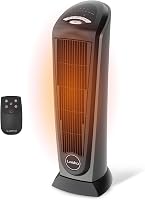
DREO Smart Wall Heater Review: Worth It? (October 2026)
Our DREO wall heater review recommends it for one regularly used room where floor space matters. App scheduling and adjustable airflow suit a steady routine, but choose a portable heater if you need warmth in different rooms.
On this page (9 sections)
- DREO wall heater review: who should buy it?
- What do its smart controls add?
- Will it suit your room?
- What should you check before mounting it?
- How should you use and care for it?
- Which portable alternative makes more sense?
- Will wall mounting lower your heating bill?
- Which buying mistakes should you avoid?
- DREO wall heater review: the final decision
The DREO Smart Wall Heater is worth choosing for a regularly used bedroom or office where floor space is tight. This DREO wall heater review favors its fixed placement and scheduled controls, provided you can mount it where airflow and outlet access work.
Skip it if you need one heater to follow you between rooms. The main buying decision is where the heat belongs, then which controls will make daily use easier.
DREO wall heater review: who should buy it?
Buy the DREO wall heater if one room needs regular supplemental warmth and you can commit to a suitable mounting spot. Its appeal is keeping the floor clear while giving you several ways to manage the heat.
DREO Smart Wall Heater

- 1500 watts
- 120° oscillation
- Wall-mounted
- App, Alexa and Google Home control
- 41–95°F setting range
A fixed heater for a bedroom or office where keeping the floor clear matters. App scheduling suits a regular routine, provided you have a suitable wall and outlet location.
Pros
- Keeps the floor clear
- App scheduling and remote access
- Alexa and Google Home compatibility
- Included remote and mounting accessories
Cons
- Requires wall installation
- Cannot move easily between rooms
- Mounting location must suit outlet access and airflow
This indoor PTC ceramic heater has a 1500-watt output and 120° oscillation. DREO gives a coverage figure of 215 sq ft, which makes a bedroom or home office a more sensible starting point than an open living area.
A fixed heater also suits a settled furniture layout. If your desk, bed and storage already have permanent places, you can plan the heater around them rather than finding a clear floor spot each day.
Who should skip the DREO wall heater?
Skip this DREO wall heater if you rent without permission to drill, rearrange furniture often or need warmth in several rooms. A portable model avoids committing your heating spot to one wall.
It is also a poor fit when the only available wall faces a wardrobe, curtain or other obstruction. Keeping the floor clear only helps if the mounted heater still has the space its manual requires.
What do its smart controls add?
The smart controls are useful for managing a regular heating routine. The DREO app lets you schedule heating hours and change settings remotely, while Alexa and Google Home add voice control.
The included remote is useful when you are already in the room and want a quick adjustment. You do not need to make every change through your phone.
Temperature settings run from 41–95°F, and DREO claims control accuracy within 1°F. That describes the control system, not a promise that every corner of the room will stay at the same temperature.
Start with a moderate target and judge comfort where you sit. Turning the setting much higher than you need can keep the heater running longer rather than make the room warm faster.
DREO also says the LED panel dims in low-light conditions and describes the heater as operating with lower noise. If sound is your main concern, there is no numerical noise figure here to compare directly with the tower below.
Will it suit your room?
The wall heater suits a modest, enclosed room with a clear airflow path. Measure the floor area, then account for ceiling height, drafts and openings into other rooms before relying on a coverage figure.
A room with a closed door and ordinary ceiling height holds warmth differently from a drafty space with an open stairway. The same heater may feel adequate in the first and struggle in the second.
Placement matters just as much as room size. A suitable wall lets warm air reach the occupied part of the room without furniture blocking the outlet or intake.
The wall heater and DREO tower below share the same maximum electrical output, despite different coverage claims. The tower's larger stated area does not mean it produces more heat at full power.
For a better room check, use our guide to what size space heater you need. Choose around the space you actually use rather than the largest coverage number.
What should you check before mounting it?
Confirm wall support, clearances and outlet reach before drilling. The heater body measures 4.72 in deep, 20.08 in wide and 13.39 in high, but the required installation space is larger once you allow the manual's clearances.
The package includes mounting accessories and a drilling guide. Those help with layout, but you still need to follow the instructions for your wall material and the required mounting height.
Work through these checks in order:
- Read the installation section and identify the required clearances.
- Measure the wall area, including space around the heater.
- Check that furniture, doors and curtains will stay clear during normal use.
- Confirm that the cord reaches a suitable wall outlet without stretching.
- Check for concealed wiring or pipes before drilling.
- Use the mounting method and hardware specified for the wall.
Do not choose a spot that depends on an extension cord to work. Our guide to plugging a space heater into an extension cord explains why outlet access belongs in the buying decision.
A bedroom needs particular care around bedding and curtains. Read our space heaters for bedrooms guide for placement considerations, then use the heater's manual for exact distances.
How should you use and care for it?
Use the heater with clear airflow, a sensible target temperature and regular checks for dust. A fixed installation still needs attention when furniture moves or your routine changes.
During initial setup, remain nearby while you learn the controls and check the installed position. Make sure airflow reaches the intended area and that no loose fabric can drift toward the heater.
Build any schedule around times when someone can supervise use. Remote access lets you change settings, but it cannot show you whether a bag, towel or curtain has blocked the heater.
For cleaning, switch it off, unplug it and let it cool first. Follow the manual's cleaning method for vents and surfaces, keeping liquids away from electrical parts.
Do not assume a grille, filter or cover is removable unless the instructions say so. Avoid opening the housing or reaching tools through vents.
Check the plug, cord and visible mounting points from time to time. Stop using the heater if you notice damage, discoloration, a loose outlet connection or a burning smell.
Our space heater safety guide covers broader precautions. Wall mounting frees floor space, but the heater still needs clearances and careful use.
Which portable alternative makes more sense?
Choose a portable alternative if your heating location changes or you cannot install a wall unit. The 3 options below serve different needs, so decide between movable airflow, automatic circulation and fan-free warmth.
| Heater | Best reason to choose it | Main reason to skip it |
|---|---|---|
| DREO Smart Wall Heater | Keep a regular heating spot off the floor | You need room-to-room movement |
| DREO 30 Inch Oscillating Heater | Adjust airflow in different rooms | You lack a safe floor location |
| Vornado TAVH10 Heater | Let automatic controls manage heat and circulation | You want a mounted heater |
| De'Longhi EW7707CM Oil Heater | Get gentle warmth without a fan | You want quick, directed airflow |
DREO wall heater vs DREO tower heater
Choose the DREO 30 Inch Oscillating Heater for room-to-room flexibility. It gives you a floor-standing option when installation permission or a suitable wall is missing.
DREO 30 Inch Oscillating Heater

- 1500 watts
- Adjustable oscillation up to 120°
- Floor-mounted tower
- 300 sq ft stated coverage
- 5 heat levels and ECO mode
A portable tower for households that need supplemental heat in different rooms. Adjustable oscillation and several operating modes give you more ways to direct airflow.
Pros
- Moves between rooms without installation
- 4 oscillation angle choices
- 5 heat levels and 3 fan levels
- Remote control included
Cons
- Needs a clear floor location
- Coverage depends on insulation and room layout
- Tower placement can conflict with walking routes
DREO states coverage up to 300 sq ft for this tower. Its oscillation can be set to 30°, 60°, 90° or 120°, so you can choose a narrower sweep near one seat or a wider sweep across a room.
The tower also provides 5 heat levels, ECO mode and 3 fan levels. These suit buyers who want several airflow and heat choices rather than a fixed wall location.
DREO claims noise as low as 25 dB and includes a remote. The brand also identifies tip-over and overheat protection, plus a child lock.
Skip it if the tower would sit in a walkway or close to furniture. Portability is only useful when each room has a suitable outlet and a clear, stable place to put it.
DREO wall heater vs Vornado TAVH10
Choose the Vornado TAVH10 for automatic heat and circulation adjustments in a small to medium room. Its low floor format offers a different placement choice from a tall tower.
Vornado TAVH10 Heater

- 2 heat settings
- Auto Climate Control
- Fan-only option
- 12-hour timer
- Floor-mounted
A compact floor heater for buyers who want automatic adjustments to heat and circulation. It suits small to medium rooms where a low unit has a clear airflow path.
Pros
- Automatically adjusts heat and circulation
- Fan-only option
- Included remote
- Tip-over protection and automatic safety shut-off
Cons
- Needs open floor space
- U.S. use only
- Does not solve a lack of floor space
Vornado's Auto Climate Control adjusts heat and circulation to maintain a set temperature. The controls include 2 heat settings, a fan-only option and a 12-hour timer.
Its body measures 11.63 in deep, 9.25 in wide and 12 in high. Check that footprint against the available space rather than assuming a short heater will fit beside any chair.
The circulation approach needs an open path into the room. Skip it if the only available spot is tucked behind a sofa, beneath hanging fabric or in a crowded corner.
Vornado specifies U.S. use only. Choose it for its automatic room controls, while the wall-mounted DREO better serves a room where floor space is the main constraint.
DREO wall heater vs De'Longhi oil radiator
Choose the De'Longhi EW7707CM for longer periods of fan-free warmth. Oil-filled radiators take time to warm, so this style suits a settled evening better than a short burst of directed air.
De'Longhi EW7707CM Oil Heater
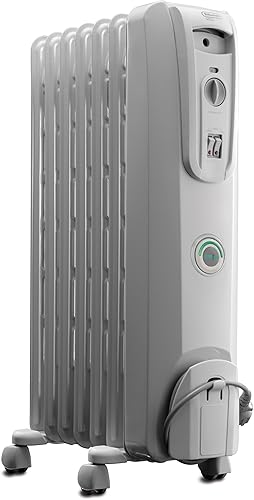
- 1500 watts
- Oil-filled radiator
- 3 heat settings
- ComfortTemp feature
- Floor-mounted with wheels
An oil-filled radiator for longer heating periods in small to medium spaces. Its fan-free design suits buyers who prefer gentle warmth and simple controls.
Pros
- No fan-driven airflow
- Built-in wheels and handle
- Simple power and temperature controls
- Sealed oil reservoir needs no refilling
Cons
- Weighs 23.2 lb
- Needs floor space
- Oil-filled heat takes time to build
The De'Longhi has 3 heat settings, an adjustable thermostat and ComfortTemp control. Its sealed oil reservoir needs no refilling.
Built-in wheels and a handle help with relocation, but its 23.2 lb weight matters if you need to carry it upstairs. Move it only as the instructions allow, and let it cool before handling.
Skip it if you need rapid airflow toward a desk or want to remove a heater from the floor entirely. It is the better match here when avoiding fan-driven air matters more than smart scheduling.
Will wall mounting lower your heating bill?
Wall mounting does not reduce electricity use by itself. Running cost depends on power draw, operating time and your electricity rate.
At full output, the DREO wall heater uses 1.5 kWh in an hour. Multiply that by your rate per kWh to estimate the cost of an hour of continuous full-power operation.
Thermostat cycling can reduce runtime once the room reaches its target, but the amount depends on heat loss and settings. A cold, drafty room can keep calling for heat.
Use our guide to how much it costs to run a space heater for the calculation. Our explainer on whether space heaters use a lot of electricity covers how runtime changes the total.
Schedules help most when they prevent needless heating. Review them after changes to work hours or room use, and avoid setting a warmer target simply because control is convenient.
Which buying mistakes should you avoid?
Avoid choosing by coverage alone or mounting before checking the whole room. A heater that fits the wall can still be wrong for the furniture layout, outlet position or daily routine.
The most common decision errors are easy to prevent:
- Confusing thermostat precision with even room temperature. Drafts and blocked airflow can leave cold spots despite a precise control setting.
- Choosing smart features before placement. An app cannot compensate for a poor mounting location.
- Treating a schedule as supervision. Check the room before operation and cancel schedules when plans change.
- Blocking vents with furniture later. Recheck clearances after moving a bed, desk or storage unit.
- Expecting one heater to warm connected rooms evenly. Focus supplemental heat on the occupied room.
- Buying a portable unit without a safe floor spot. Check each intended room before choosing mobility over mounting.
If you still need to compare fan heaters, our best ceramic tower heaters guide is a useful next step. The space heater thermostat guide explains how temperature controls affect daily use.
DREO wall heater review: the final decision
Choose the DREO Smart Wall Heater when your heating spot is settled and keeping the floor clear matters. Before ordering, confirm a workable mounting position, suitable outlet access and a clear airflow path.
Choose the DREO tower when you need to move warmth between rooms. Pick the Vornado for automatic heat and circulation control, or the De'Longhi for longer stretches of fan-free warmth.
The DREO quiet space heater review and DREO space heaters review cover more portable options. If you are still choosing a heating style, start with our best space heaters guide.
Frequently asked questions
Is the DREO Smart Wall Heater worth considering?
Yes, if you need supplemental heat in one regular room and want to keep the floor clear. App scheduling adds convenience for a steady routine, but the installation only makes sense when you have a suitable wall, nearby outlet and room layout that allows clear airflow.
Does the DREO Smart Wall Heater need to be mounted?
Yes, this model is designed for wall mounting and includes installation accessories and a drilling guide. Follow its manual for mounting height, wall support and clearances.
Do not assume it can stand on the floor, and confirm that the cord can reach a suitable wall outlet before drilling.
Can you control the DREO Smart Wall Heater with an app?
Yes, the DREO app supports remote access to heater settings and scheduled heating hours. Alexa and Google Home compatibility adds voice control, while an included remote provides another option.
Set schedules around times when you can supervise use, and cancel them when your routine changes.
How does the DREO wall heater compare with a tower heater?
The wall model keeps floor space open, while a tower can move between rooms without a new installation. Choose the wall heater for a settled furniture layout and regular heating spot.
Choose a tower if your needs change by room, season or where you sit.